Amazon.com (NASDAQ: AMZN ) is giving away over 1 million MP3s to every Prime subscriber.
The company unveiled its Prime Music service on Thursday. The on-demand streaming service is severely limited in its early stages, offering just 5% of the catalog of other streaming services like Spotify or Apple's (NASDAQ: AAPL ) Beats Music. Additionally, Prime Music doesn't offer an Internet radio feature like Pandora Media (NYSE: P ) .
At first blush, these obvious weaknesses may make it seem like Prime Music is doomed to fail. But what seem like Prime Music's biggest weaknesses may turn out to be its biggest strengths.
When 1 million is a small number
Amazon boasts over 1 million songs available for free streaming on Prime Music. While 1 million songs sounds like a lot (I certainly have listened to far fewer in my life), it pales in comparison to the competition.
Beats Music, Spotify, Rdio, and Rhapsody each sport around 20 million songs available for streaming. Pandora offers a similarly large set of songs from all the major recording labels.
Amazon's first stumbling block came with Universal Music Group. Although the company says it's in active discussions with Universal, the omission from the catalog at launch is painstakingly noticeable.
Additionally, the service omits songs released within the last six months. This might not be as big of a problem for a streaming service as omitting an entire label's catalog from the library, but it's something all of the competitors have.
Why a limited library may be an asset for Amazon
Amazon operates the second largest digital music store after Apple's iTunes.
The nascent digital download industry is already being disrupted by streaming services. Last year, digital download sales fell for the first time in history. In the first quarter of 2014, digital music sales declined 13.3%, according to Nielsen SoundScan.
Meanwhile, streaming services continue to grow. Pandora, for example, grew listener hours 28% and 30% in April and May, respectively. (Note: That comes after lifting monthly listener hour restrictions.) Overall, on-demand streaming plays climbed 34.7% in the first quarter of 2014.
Apple has responded to the rise of music streaming by joining it. Last year, the company launched iTunes Radio, and the company acquired Beats Electronics and its music streaming service last month. Apple hopes these efforts will mitigate the effect of declining digital sales.
Amazon's billion-dollar digital music store is similarly under attack, and Prime Music is its answer to the plethora of music streaming options.
Prime Music is integrated with the rest of Amazon's music store, now simply dubbed Amazon Music. To play songs, Prime members are asked to add interesting albums and playlists to their personal library, where the free Prime Music is collected along with personal uploads to Amazon Cloud Player and past purchases from Amazon MP3. It puts all of the user's available music in one place.
More important, this seamless integration with the digital music store may ultimately lead to users exploring outside of the Prime Music catalog in order to bolster their libraries. Amazon uses its recommendation engine to funnel users toward actual purchases as well as other free Prime Music offers.
Can the loss-leader strategy work?
If someone is looking for a stand-alone on-demand streaming service, Prime Music is probably at the bottom of the list... unless they've already subscribed to Amazon Prime. At that point, it requires serious consideration, and at least a test run.
That may be one of the keys to Amazon's strategy: Get people in the door with 1 million free songs, then make money on the back end selling them new (or otherwise unavailable) music in the digital download store.
Big-box retailers have used the loss-leader strategy successfully for years. Amazon's entire Prime service is practically based on it. Prime Music is just another extension of the strategy, and a smart one at that.
Leaked: Apple's next secret weapon
Apple recently recruited a secret-development "dream team" to guarantee its newest smart device was kept hidden from the public for as long as possible. But the secret is out, and some early viewers are claiming its everyday impact could trump the iPod, iPhone, and the iPad. In fact, ABI Research predicts 485 million of this type of device will be sold per year. But one small company makes Apple's gadget possible. And its stock price has nearly unlimited room to run for early in-the-know investors. To be one of them, and see Apple's newest smart gizmo, just click here!

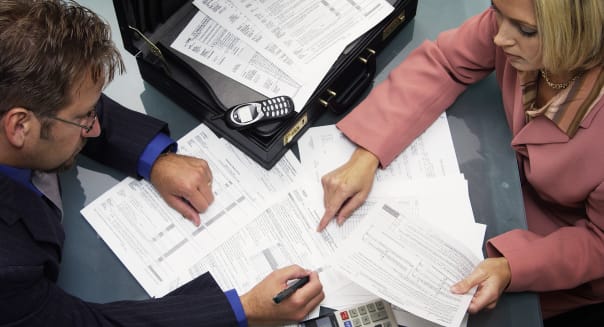 Alamy In the rush to get your tax returns out the door, it's common to make costly mistakes. Let's look at three of the most common last-minute issues. Getting An Extension? Don't Forget This Vital Step If you can't get your taxes finished by the April 15 deadline, the Internal Revenue Service will freely grant you a six-month extension to file your taxes, giving you until Oct. 15 to get all your numbers and records together and put together a final return for filing. But just because you can get a free extension to file doesn't mean that you get extra time to pay. Even if you request and receive a six-month tax filing extension, you're still liable for any tax you still owe. If you don't pay, then the clock will begin on interest and penalties for failing to pay. At current rates, those charges will include 3 percent interest on the underpaid amount, plus an extra 1/2 of 1 percent in penalties for every month your unpaid tax is late. The penalty maxes out at 25 percent if you're 50 months or more late on your payments. Still, extending is a smart move even if you can't pay, because if you don't request an extension and file 60 days late or more, then the minimum penalty becomes $135 or 100 percent of your unpaid tax, whichever is less -- regardless of what percentage of your total tax liability that ends up being. In general, it makes sense to slightly overpay your expected taxes with your extension request so as to give yourself some breathing room in case your initial calculations prove to be incorrect. Take All the Credits You're Entitled to Receive Remembering to claim all the tax breaks that you deserve often gets lost in the shuffle. The IRS estimates one out of every five federal tax filers don't claim the money they're entitled to with the Earned Income Tax Credit. The worst thing about missing it is that, unlike most credits, it is a refundable credit -- meaning that you can get money back from the federal government even if you don't owe any tax. Depending on how many eligible kids you have, we're talking about credits of as much as $3,250 to $6,044. Other credits can also bring in big money. Whether it's the American Opportunity Tax Credit for education or the Child Tax Credit and Child and Dependent Care Credit for families, make sure not to miss out on any chance you have to cut your tax bill. Make Sure Your Money Goes to the Right Place For those of you expecting a refund, waiting can be the hardest part. Yet if you give the IRS the wrong information, it can be a lot harder for you to receive your hard-earned tax money back. Direct-deposit options are a great way to get your refund, with turnaround times that are much faster than with mailed refunds, especially in combination with electronically filed tax returns. But it's essential that you get your bank account information correct, paying attention to your financial institution's routing number, your account number and your type of account. Make a mistake, and you could end up in IRS refund limbo -- especially if the incorrect information you use corresponds to someone else's existing bank account. There are plenty of other mistakes that people make, but these three can be among the most costly and time-consuming to fix.
 Getty Images
 Getty Images Americans really care about banking fees, but are hapless at skirting them. Less than a third of all bank accounts come attached with no fees at all, while expenses are rising on accounts that do. The median overdraft fee, for example, has crept to $34 per transaction, or roughly a 17,000 percent annual percentage rate for taking out 20 bucks at the ATM, according to the Consumer Financial Protection Bureau. A February GOBankingRates poll found fees are the No. 1 factor that sway consumers' banking decisions, with 45 percent of respondents saying they decide where to bank based on fee structures - more than rates, customer service and accessibility combined. Yet in 2013, banks earned $31.8 billion in overdraft fees alone. That could be because customers don't realize how much they're giving up in fees. Of the 30 percent of Americans who frequently overdraw, half do it because they don't know their account balances. A sixth say they overdraw because their banks' overdraft policies are too confusing. Overdrafts are just the tip of the iceberg, too. The average checking account comes with about 30 fees, according to WalletHub, and not all of them are as easy to predict as overdraft or monthly service charges. Here are some of the sneakier fees that come attached to your standard bank account -- and how you can make sure they don't deplete your savings. 1. Reordered Overdraft Fees According to a 2014 survey from Pew Charitable Trusts, almost half of all major banks reorder checking account transactions so that they post by size, not the order in which they were made. For bank customers who are susceptible to overdrawing their accounts, this switch could cause one overdraft charge to balloon into three or four. Banks that employ this practice (almost all of the major ones except for Citibank (C)) say they do this so that larger and more important expenses like mortgage payments clear first. The actual result is that consumers overdraw their accounts sooner and more often, with each subsequent overdraft racking up another 30-something dollars. If you overdraw your account because of posting order, your best bet is probably to appeal the charge to the bank -- although appealing any kind of bank fees can be tough, said Warren Taylor, president of BankMobile. "If one carries high balances, some banks will negotiate the fees with you -- but most banks require their branches to keep 92 to 98 percent of fees charged," he said. "If you don't have a lot of money, you are in trouble. You can appeal to the regulator of the bank or the CFPB to intercede on your behalf if you feel the fees are abusive." 2. $5 Charge to Overdraft This is a service Bank of America (BAC) rolled out this year with its SafeBalance account, a product that promises account holders won't have to pay overdraft charges -- just a $4.95 monthly fee. Any time you try to spend more than the balance in your account, your transaction is declined. Of course, this is an option that's technically available to anyone, regardless of fee. The Federal Reserve ruled in 2010 that consumers have to opt-in to overdraft protection in order to be charged, otherwise their cards should be rejected. Opt-in to these types of services and you're basically paying the bank for the favor of not lending you money. If your bank offers you overdraft protection upon account opening (and per the 2010 law, it has to offer it, not just automatically apply it), don't take it. You're also allowed to opt out of overdraft protection later on, so if you're a chronic overspender, contact your bank and ask to have the service turned off. If you want to go a step further, Elle Kaplan, founder of LexION Capital Management, recommends staying away from debit cards altogether. "Think about forgoing a debit card, which links directly to your checking account, in favor of an ATM card, which only allows you to withdraw cash," she said. "I've always opted for an ATM-only card because in case of loss or theft, someone can't simply take the card and start charging purchases to your account." And, as always, carefully monitor your account activity to keep your likelihood of overdrawing to a minimum. "Keep careful track of how much money is in your account at any one time so that you're never hit with an overdraft fee," Kaplan said. "Pay special attention to any automatic transfers and make sure that you've always got enough money in your account to cover them. Set up reminders in your calendar to check." 3. Big Deposit Fee This one falls in the "I'm sorry your diamond shoes are too tight" category: Many banks have started charging their biggest customers fees for parking large amounts of cash in their accounts, even though big deposits are part of what fuel financial institutions. It's basically the opposite of a minimum balance fee and it's wholly avoidable. If you're wealthy enough for this to be an issue, you shouldn't be keeping all your cash in one account anyway; the FDIC only insures total deposits at a single institution for up to $250,000 per depositor. Follow Warren Buffett's advice and keep your money in a number of safe, low-cost, long-term investments, like index funds. If you're saving for a specific goal -- such as retirement -- you probably want to park your savings in a specialized product, such as a tax-advantaged Roth IRA or 401(k). 4. Early Account Closure Fee Banks began charging a fee for closing account within months of opening after 2011's first Bank Transfer Day, in which hundreds of thousands of former bank customers closed their accounts and joined local credit unions in protest of -- yep -- predatory fee structures. The amount of time required to keep an account open and the fee charged if you don't can vary by institution, but in general, this expense can be pretty hefty, around $25 to $50 at most major banks. 5. Returned Mail Fee If you move, don't forget to fill out a change-of-address form online or at your local post office. If your bank statements are sent back marked "return to sender," you could incur a fee, usually around $5, which banks say is justified because returned mail often triggers extra fraud protection. You can also avoid this charge by going paperless completely and opting for e-statements, a choice your bank might even reward you for with a higher interest rate or waived service fee. (Banks are fans of paperless correspondence too, because it means they can save money on postage costs.) Check to see if your financial institution offers any incentives for making the switch. 6. Minimum Balance Fee They're usually not even hidden in the fine print, but these charges can easily sneak up on you, especially if you change your depositing habits. Most bank accounts have a minimum balance threshold you have to clear in order to waive a monthly service fee - say, $1,000 to avoid a $12 recurring expense. Often, the higher the interest rate on the account, the higher your minimum balance requirement, though many institutions also waive the charge if you have a regular, automated incoming deposit. Like many fees, these kinds of monthly service charges are the hardest on depositors with less reliable income streams. Te-Erika Patterson, a freelance writer, said she recently noticed she'd been charged a $12 service fee on her Bank of America account. "When I looked it up, it was a fine print penalty for not maintaining a certain amount in my account for the month and not receiving any direct deposits over $250," she said. The solution is to find an account with a low minimum balance requirement or a monthly fee that's more easily waived; some accounts will let you duck it by just signing up for e-statements. But if you don't want to switch accounts or banks, there might be a few creative ways to get around the charge. "To remedy the issue, I just take money from my Paypal account and withdraw it into my bank account every month," Patterson said. "That counts as a direct deposit."
  Dominik Pabis/Getty Images Do you want to buy clothes that are made in America? And are you willing to pay what it costs to help bring manufacturing jobs back to America -- and be once again able to buy quality goods that will last, in return for your money? Words and Actions Most Americans answer yes to the first question -- initially, at least. A New York Times poll last year found 46 percent of shoppers saying they would happily pay the same price -- or even a bit of a premium -- to own clothing made in America, as opposed to clothing made in China, Vietnam or another foreign country. Yet according to American-made apparel manufacturer Buck Mason, less than 3 percent of clothing is made in America. Why is this? Many products made in America sell for prices far higher than what similar products made elsewhere cost. What's more, even if you are willing to pay the premium for quality (the Times poll noted that 56 percent of Americans say American-made clothing is of higher quality than imports), Buck Mason laments: "it is virtually impossible to go to a mall anywhere, and find a high-quality, American-made garment" today. So there are really two problems for shoppers looking to "buy American" today. First, you can't find such goods to buy. Second, if you do find them, they cost too much. American Apparel One company trying to fix the first problem is Los Angeles-based American Apparel (APP). A vertically integrated clothing company (meaning it owns and operates its own retail stores, selling its own clothing), American Apparel makes its clothing in the U.S. and sells it here and abroad. Despite charging prices that can be twice the cost of imports, however, American Apparel has struggled to earn a profit. The company ran into difficulties with its financial auditor in 2010 and suffered through a Securities and Exchange Commission investigation as a result. Sales growth has been anemic; American Apparel is losing money; and at last report, the company was $235 million in debt. Adding existential crisis to injury, American Apparel just ousted CEO Dov Charney, setting the stage for a nasty lawsuit with him. Giant retailer Walmart (WMT) is having different difficulties with the made-in-America business model. You've probably heard that Walmart plans to spend an additional "$50 billion" over the next 10 years, buying American-made goods to sell in its stores. However, after contributing to the dearth of supply in the first place -- by pushing suppliers to cut prices, forcing many of them to close up shop in the U.S. and move manufacturing abroad -- Walmart is scrambling to find businesses that still make stuff in America, to stock its shelves and help it fulfill its promise. American Prices And what about the second part of the problem: price? With the falling cost of energy in the U.S. resulting from the shale oil boom, advances in manufacturing technology such as 3-D printing and rising cost of labor elsewhere, you'd think U.S.-made goods would be getting more cost-competitive. So why do they still cost so much? Buck Mason co-founder Sasha Koehn points the finger at the multiple links in the supply chain that clothing passes through today en route from manufacturer to retailer. If a T-shirt from Thailand sells for $10 wholesale, for example, then delivery to industry showrooms, sales to wholesalers, resales to retailers and final sales to consumers can push the price tag on that tee up past $50. Koehn notes that the garment industry standard is for prices to get marked up as much as 800 percent between manufacture and retail. A Modest Solution Buck Mason is challenging industry norms with a two-pronged approach. First, the company limits price mark-ups with a "direct-to-consumer" model, manufacturing clothing in-house, then selling over the Internet to customers. By cutting out the middleman, Koehn says he's able to hold its retail prices to just twice the cost of manufacturing -- rather than 800 percent. Still, as long as American workers are paid better wages than their counterparts overseas, made-in-USA prices will remain higher than American shoppers are used to paying. (Buck Mason sells jeans for $135, belts for $72, and T-shirts for $24.) With its cost structure as low as it can go, therefore, Buck Mason focuses its efforts on ensuring customers "get what they pay for." Paying up for high-quality raw materials, Buck Mason sources leather for its belts from a century-old tannery in Chicago, for example. Koehn says that Buck Mason gets its denim from a North Carolina plant that charges $16 a yard just for the fabric. On one hand, this helps preserve American jobs and the same manufacturing base Walmart says it wants to promote. On the other hand, the higher-quality materials, Koehn says, enable it to stand behind the promise that its "30 Year Belts" and "20 Year Boots" names imply. Will this business model work? If shoppers really do mean what they say about wanting to "buy American," it just might. .
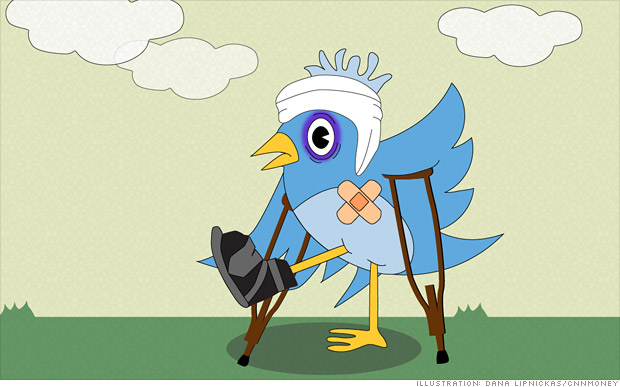 Ouch. Standard & Poor's just assigned Twitter's debt with a junk rating. LONDON (CNNMoney) Twitter just got junked.
 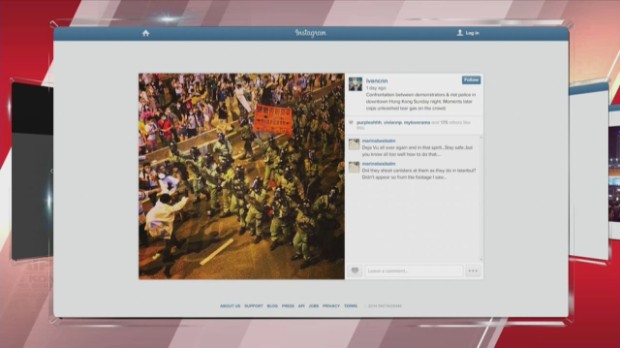 Instagram blocked in China
  Kathryn Scott Osler/The Denver Post via Getty Images Several businesses will be showing their appreciation for those who have served our country by giving them free meals, services and more on or around Veterans Day. Here's a roundup of the special offers available to veterans and military personnel. Note that some of these offers are available on days other than the Veterans Day holiday on Nov. 11. If you don't see your favorite establishment listed, call it directly to see if it will be honoring veterans and service members with any freebies. And check back because we'll be adding more deals as we learn about them. Free Food Applebee's is offering veterans and active-duty military members a free entree on Nov. 11 (dine-in only). Proof of service required. Bar Louie, with locations in 24 states, will honor veterans and active-duty military members with a free meal up to a $12 value on Nov. 10-11 when they show valid military ID or other proof of service. Bob Evans will let veterans and active-duty military enjoy free all-you-can-eat pancakes on Nov. 11. California Pizza Kitchen is offering a free entree from a special menu (dine-in only) Nov. 11 to veterans and active military members who come in uniform or bring proof of service. Cheeseburger in Paradise Bar & Grill, with locations in seven states, will give veterans and military personnel with proof of ID a free burger and fries on Nov. 11. Denny's is offering active, non-active and retired military personnel a free Build Your Own Grand Slam breakfast meal from 5 a.m. to noon on Nov. 11. Golden Corral will hold its annual free military appreciation dinner Nov. 17 from 5 p.m. to 9 p.m. to anyone who has ever served in the military (no ID required). The dinner is open to friends and family of military members, but they will have to pay the regular dinner menu pricing. Handel's Homemade Ice Cream & Yogurt will be giving away free single-scoop ice cream cones to veterans and military personnel with valid ID on Nov. 11 at participating shops. No purchase is required. Handel's has 40 locations in seven states. Krispy Kreme will give a free doughnut and coffee to veterans and active military (no ID required) on Nov. 11. LongHorn Steakhouse will offer veterans and active military members a free Texas Tonion appetizer and non-alcohol beverage on Nov. 11 with proof of service. McCormick & Schmick's Seafood Restaurants, with locations in 22 states and the District of Columbia, will offer veterans (with official ID) a free entree from a special menu Nov. 9. Dine-in only. Olive Garden will give active-duty military and veterans a free entree from a special menu on Nov. 11. On the Border is giving veterans and active military who dine in the restaurant Nov. 11 a free meal from its "create your own combo" menu. Red Lobster will be giving veterans and active-duty military members with valid ID or proof of service a free select appetizer Nov. 10-13. Shoney's will offer veterans and active-duty military a free All-American Burger on Nov. 11. Texas Roadhouse will honor veterans and active-duty military with a free lunch from a special menu Nov. 11. Proof of service required. Wayback Burgers will offer veterans and active-duty military a Wayback Classic Burger with the purchase of any side and drink on Nov. 11. Valid form of military ID required. Free Services and Product Discounts JDog Junk Removal & Hauling is offering free junk removal services for disabled veterans who book a service on Nov. 11. The franchise, which is owned and operated by veterans, has locations in six states. Sleep Number is offering special discounts on select Sleep Number beds to current and past military personnel through Nov. 16. Free Park Admission Colonial Williamsburg in Virginia is offering free admission Nov. 7-11 to active-duty military, reservists, veterans and retired military and their dependents. Knott's Berry Farm in California is offering free admission for veterans and active-duty military (with ID) and one guest Nov. 2 through Jan. 4. U.S. National Parks will waive entrance fees on Nov. 11 for everyone at the 133 parks that usually charge an entrance fee. Business Opportunities for Vets Baskin-Robbins is offering an incentive program to veterans who want to open a Baskin-Robbins franchise. It will waive the franchise fee of $25,000 and offer a zero percent royalty rate for the first two years for five qualified veterans.
 J. Scott Applewhite/AP WASHINGTON -- A cyberattack similar to previous hacker intrusions from China penetrated computer networks for months at USIS, the government's leading security clearance contractor, before the company noticed, officials and others familiar with an FBI investigation and related official inquiries told The Associated Press. The breach, first revealed by the company and government agencies in August, compromised the private records of at least 25,000 employees at the Homeland Security Department and cost the company hundreds of millions of dollars in lost government contracts. In addition to trying to identify the perpetrators and evaluate the scale of the stolen material, the government inquiries have prompted concerns about why computer detection alarms inside the company failed to quickly notice the hackers and whether federal agencies that hired the company should have monitored its practices more closely. Former employees of the firm, U.S. Investigations Services, also have raised questions about why the company and the government failed to ensure that outdated background reports containing personal data weren't regularly purged from the company's computers. Details about the investigation and related inquiries were described by federal officials and others familiar with the case. The officials spoke only on condition of anonymity because they were not authorized to comment publicly on the continuing criminal investigation, the others because of concerns about possible litigation. A computer forensics analysis by consultants hired by the company's lawyers defended USIS' handling of the breach, noting it was the firm that reported the incident. The analysis said government agencies regularly reviewed and approved the firm's early warning system. In the analysis, submitted to federal officials in September and obtained by the AP, the consultants criticized the government's decision in August to indefinitely halt the firm's background investigations. Familiar Attacks USIS reported the cyberattack to federal authorities on June 5, more than two months before acknowledging it publicly. The attack had hallmarks similar to past intrusions by Chinese hackers, according to people familiar with the investigation. Last March, hackers traced to China were reported to have penetrated computers at the Office of Personnel Management, the federal agency that oversees most background investigations of government workers and has contracted extensively with USIS. In a brief interview, Joseph Demarest, assistant director of the FBI's cyber division, described the hack against USIS as "sophisticated" but said "we're still working through that as well." He added, "There is some attribution" as to who was responsible, but he declined to comment further. For many people, the impact of the USIS break-in is dwarfed by recent intrusions that exposed credit and private records of millions of customers at JPMorgan Chase (JPM), Target (TGT) and Home Depot (HD). But it's significant because the government relies heavily on contractors to vet U.S. workers in sensitive jobs. The possibility that national security background investigations are vulnerable to cyber-espionage could undermine the integrity of the verification system used to review more than 5 million government workers and contract employees. Treasure Trove "The information gathered in the security clearance process is a treasure chest for cyberhackers. If the contractors and the agencies that hire them can't safeguard their material, the whole system becomes unreliable," said Alan Paller, head of SANS, a cybersecurity training school, and former co-chair of DHS' task force on cyberskills. Last month, the leaders of the Senate Homeland Security and Governmental Affairs Committee, Tom Carper, D-Del., and Tom Coburn, R-Okla., pressed OPM and DHS about their oversight of contractors and USIS' performance before and during the cyberattack. Another committee member, Sen. Jon Tester, D-Mont., said he worried about the security of background check data, telling the AP that contractors and federal agencies need to "maintain a modern, adaptable and secure IT infrastructure system that stays ahead of those who would attack our national interests." The Office of Personnel Management and the Homeland Security Department indefinitely halted all USIS work on background investigations in August. OPM, which paid the company $320 million for investigative and support services in 2013, later decided not to renew its background check contracts with the firm. The move prompted USIS to lay off its entire force of 2,500 investigators. A company spokesperson complained that the agency hasn't explained its decision. Representatives from OPM and DHS declined comment. Cybersecurity Not Evaluated Last month, the federal Government Accounting Office ruled that Homeland Security should re-evaluate a $200 million support contract award to USIS. The GAO advised the department to consider shifting the contract to FCi Federal, a rival firm, prompting protests from USIS. In the private analysis prepared for USIS by Stroz Friedberg, a digital risk management firm, managing director Bret A. Padres said the company's computers had government-approved "perimeter protection, antivirus, user authentication and intrusion-detection technologies." But Padres said his firm didn't evaluate the strength of USIS' cybersecurity measures before the intrusion. Federal officials familiar with the government inquiries said those assessments raised concerns that USIS' computer system and its managers weren't primed to rapidly detect the breach quickly once hackers got inside. The computer system was probably penetrated months before the government was notified in June, officials said. Cybersecurity experts say attacks on corporate targets often occur up to 18 months before they are discovered and are usually detected by the government or outside security specialists. Still, USIS noted its own security preparations "enabled us to self-detect this unlawful attack." Padres said the hackers attacked a vulnerable computer server in "a connected but separate network, managed by a third party not affiliated with USIS." He didn't identify the outside company. Sensitive Data Not Protected Former USIS workers told the AP that company investigators sometimes stored old or duplicate background reports that should have been purged from their laptops. The reports contained sensitive financial and personal data that could be used for blackmail or to harm government workers' credit ratings, the former workers said. Former USIS employees who worked with the federal personnel office said the system they used directed users to purge old reports. But the workers said USIS and OPM rarely followed up with spot checks. Employees who worked on systems with the Homeland Security Department said these had no similar automatic warning function and spot checks were rare. The company insisted spot checks were regularly performed. Several former USIS workers said they were told nothing by the company about the cyberattack for two months after the breach was exposed. In emails obtained by the AP, company workers were ordered to change their passwords without explanation. The USIS spokesperson said the government directed the company's decision to keep silent about the breach. Experts said companies often withhold such information for both security and management reasons. "Employees may not like it," Paller said, "but from a business perspective, that's what companies do." -.
  Charles Rex Arbogast/AP U.S. manufacturing activity unexpectedly accelerated in October as new orders rebounded strongly, which should ease concerns of a significant moderation in economic growth in the fourth quarter. Other data Monday showed strong automobile sales last month, although top-seller General Motors (GM) missed expectations. The Institute for Supply Management said its index of national factory activity rose to 59 last month from a reading of 56.6 in September. The index is now back at a 3½ year high touched in August. The reading exceeded expectations of 56.2, according to a Reuters poll of economists, topping even the most optimistic estimate of 57.3. A reading above 50 indicates expansion in the manufacturing sector. The employment gauge recovered in October to 55.5 from 54.6 in September, while the new orders index rose to 65.8 from October's reading of 60. The upbeat report suggests that the economy retained much of its momentum from the third quarter. There have been fears that growth in the final three months of the year could slow down significantly after reports last week showed weak consumer spending and business investment plans at the end of the April-June quarter. The government last week reported that the economy grew at a 3.5 percent annual pace in the third quarter. But a separate report Monday showing a surprise decline in construction spending in September suggested this growth estimate could be revised lower. Construction spending dropped 0.4 percent to an annual rate of $950.9 billion, the Commerce Department said. August's construction outlays were revised to show a 0.5 percent fall instead of the previously reported 0.8 percent decline. Economists polled by Reuters had forecast construction spending rising 0.7 percent. In September, private construction spending dipped 0.1 percent to its lowest level since October last year as an increase in residential outlays was offset by a decline in spending on nonresidential projects. It was the fourth straight month of declines in private constructions spending. Spending on public construction projects fell 1.3 percent in September, with state and local government investment declining 1.4 percent. Spending on construction projects by the federal government slipped 0.3 percent, falling for a third consecutive month.


