Amazon.com (NASDAQ: AMZN ) is giving away over 1 million MP3s to every Prime subscriber.
The company unveiled its Prime Music service on Thursday. The on-demand streaming service is severely limited in its early stages, offering just 5% of the catalog of other streaming services like Spotify or Apple's (NASDAQ: AAPL ) Beats Music. Additionally, Prime Music doesn't offer an Internet radio feature like Pandora Media (NYSE: P ) .
At first blush, these obvious weaknesses may make it seem like Prime Music is doomed to fail. But what seem like Prime Music's biggest weaknesses may turn out to be its biggest strengths.
When 1 million is a small number
Amazon boasts over 1 million songs available for free streaming on Prime Music. While 1 million songs sounds like a lot (I certainly have listened to far fewer in my life), it pales in comparison to the competition.
Beats Music, Spotify, Rdio, and Rhapsody each sport around 20 million songs available for streaming. Pandora offers a similarly large set of songs from all the major recording labels.
Amazon's first stumbling block came with Universal Music Group. Although the company says it's in active discussions with Universal, the omission from the catalog at launch is painstakingly noticeable.
Additionally, the service omits songs released within the last six months. This might not be as big of a problem for a streaming service as omitting an entire label's catalog from the library, but it's something all of the competitors have.
Why a limited library may be an asset for Amazon
Amazon operates the second largest digital music store after Apple's iTunes.
The nascent digital download industry is already being disrupted by streaming services. Last year, digital download sales fell for the first time in history. In the first quarter of 2014, digital music sales declined 13.3%, according to Nielsen SoundScan.
Meanwhile, streaming services continue to grow. Pandora, for example, grew listener hours 28% and 30% in April and May, respectively. (Note: That comes after lifting monthly listener hour restrictions.) Overall, on-demand streaming plays climbed 34.7% in the first quarter of 2014.
Apple has responded to the rise of music streaming by joining it. Last year, the company launched iTunes Radio, and the company acquired Beats Electronics and its music streaming service last month. Apple hopes these efforts will mitigate the effect of declining digital sales.
Amazon's billion-dollar digital music store is similarly under attack, and Prime Music is its answer to the plethora of music streaming options.
Prime Music is integrated with the rest of Amazon's music store, now simply dubbed Amazon Music. To play songs, Prime members are asked to add interesting albums and playlists to their personal library, where the free Prime Music is collected along with personal uploads to Amazon Cloud Player and past purchases from Amazon MP3. It puts all of the user's available music in one place.
More important, this seamless integration with the digital music store may ultimately lead to users exploring outside of the Prime Music catalog in order to bolster their libraries. Amazon uses its recommendation engine to funnel users toward actual purchases as well as other free Prime Music offers.
Can the loss-leader strategy work?
If someone is looking for a stand-alone on-demand streaming service, Prime Music is probably at the bottom of the list... unless they've already subscribed to Amazon Prime. At that point, it requires serious consideration, and at least a test run.
That may be one of the keys to Amazon's strategy: Get people in the door with 1 million free songs, then make money on the back end selling them new (or otherwise unavailable) music in the digital download store.
Big-box retailers have used the loss-leader strategy successfully for years. Amazon's entire Prime service is practically based on it. Prime Music is just another extension of the strategy, and a smart one at that.
Leaked: Apple's next secret weapon
Apple recently recruited a secret-development "dream team" to guarantee its newest smart device was kept hidden from the public for as long as possible. But the secret is out, and some early viewers are claiming its everyday impact could trump the iPod, iPhone, and the iPad. In fact, ABI Research predicts 485 million of this type of device will be sold per year. But one small company makes Apple's gadget possible. And its stock price has nearly unlimited room to run for early in-the-know investors. To be one of them, and see Apple's newest smart gizmo, just click here!

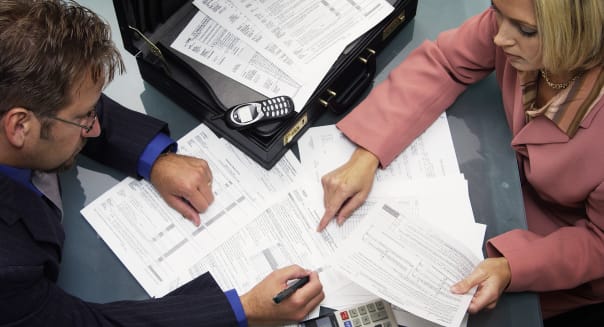 Alamy In the rush to get your tax returns out the door, it's common to make costly mistakes. Let's look at three of the most common last-minute issues. Getting An Extension? Don't Forget This Vital Step If you can't get your taxes finished by the April 15 deadline, the Internal Revenue Service will freely grant you a six-month extension to file your taxes, giving you until Oct. 15 to get all your numbers and records together and put together a final return for filing. But just because you can get a free extension to file doesn't mean that you get extra time to pay. Even if you request and receive a six-month tax filing extension, you're still liable for any tax you still owe. If you don't pay, then the clock will begin on interest and penalties for failing to pay. At current rates, those charges will include 3 percent interest on the underpaid amount, plus an extra 1/2 of 1 percent in penalties for every month your unpaid tax is late. The penalty maxes out at 25 percent if you're 50 months or more late on your payments. Still, extending is a smart move even if you can't pay, because if you don't request an extension and file 60 days late or more, then the minimum penalty becomes $135 or 100 percent of your unpaid tax, whichever is less -- regardless of what percentage of your total tax liability that ends up being. In general, it makes sense to slightly overpay your expected taxes with your extension request so as to give yourself some breathing room in case your initial calculations prove to be incorrect. Take All the Credits You're Entitled to Receive Remembering to claim all the tax breaks that you deserve often gets lost in the shuffle. The IRS estimates one out of every five federal tax filers don't claim the money they're entitled to with the Earned Income Tax Credit. The worst thing about missing it is that, unlike most credits, it is a refundable credit -- meaning that you can get money back from the federal government even if you don't owe any tax. Depending on how many eligible kids you have, we're talking about credits of as much as $3,250 to $6,044. Other credits can also bring in big money. Whether it's the American Opportunity Tax Credit for education or the Child Tax Credit and Child and Dependent Care Credit for families, make sure not to miss out on any chance you have to cut your tax bill. Make Sure Your Money Goes to the Right Place For those of you expecting a refund, waiting can be the hardest part. Yet if you give the IRS the wrong information, it can be a lot harder for you to receive your hard-earned tax money back. Direct-deposit options are a great way to get your refund, with turnaround times that are much faster than with mailed refunds, especially in combination with electronically filed tax returns. But it's essential that you get your bank account information correct, paying attention to your financial institution's routing number, your account number and your type of account. Make a mistake, and you could end up in IRS refund limbo -- especially if the incorrect information you use corresponds to someone else's existing bank account. There are plenty of other mistakes that people make, but these three can be among the most costly and time-consuming to fix.
 Getty Images
 Getty Images Americans really care about banking fees, but are hapless at skirting them. Less than a third of all bank accounts come attached with no fees at all, while expenses are rising on accounts that do. The median overdraft fee, for example, has crept to $34 per transaction, or roughly a 17,000 percent annual percentage rate for taking out 20 bucks at the ATM, according to the Consumer Financial Protection Bureau. A February GOBankingRates poll found fees are the No. 1 factor that sway consumers' banking decisions, with 45 percent of respondents saying they decide where to bank based on fee structures - more than rates, customer service and accessibility combined. Yet in 2013, banks earned $31.8 billion in overdraft fees alone. That could be because customers don't realize how much they're giving up in fees. Of the 30 percent of Americans who frequently overdraw, half do it because they don't know their account balances. A sixth say they overdraw because their banks' overdraft policies are too confusing. Overdrafts are just the tip of the iceberg, too. The average checking account comes with about 30 fees, according to WalletHub, and not all of them are as easy to predict as overdraft or monthly service charges. Here are some of the sneakier fees that come attached to your standard bank account -- and how you can make sure they don't deplete your savings. 1. Reordered Overdraft Fees According to a 2014 survey from Pew Charitable Trusts, almost half of all major banks reorder checking account transactions so that they post by size, not the order in which they were made. For bank customers who are susceptible to overdrawing their accounts, this switch could cause one overdraft charge to balloon into three or four. Banks that employ this practice (almost all of the major ones except for Citibank (C)) say they do this so that larger and more important expenses like mortgage payments clear first. The actual result is that consumers overdraw their accounts sooner and more often, with each subsequent overdraft racking up another 30-something dollars. If you overdraw your account because of posting order, your best bet is probably to appeal the charge to the bank -- although appealing any kind of bank fees can be tough, said Warren Taylor, president of BankMobile. "If one carries high balances, some banks will negotiate the fees with you -- but most banks require their branches to keep 92 to 98 percent of fees charged," he said. "If you don't have a lot of money, you are in trouble. You can appeal to the regulator of the bank or the CFPB to intercede on your behalf if you feel the fees are abusive." 2. $5 Charge to Overdraft This is a service Bank of America (BAC) rolled out this year with its SafeBalance account, a product that promises account holders won't have to pay overdraft charges -- just a $4.95 monthly fee. Any time you try to spend more than the balance in your account, your transaction is declined. Of course, this is an option that's technically available to anyone, regardless of fee. The Federal Reserve ruled in 2010 that consumers have to opt-in to overdraft protection in order to be charged, otherwise their cards should be rejected. Opt-in to these types of services and you're basically paying the bank for the favor of not lending you money. If your bank offers you overdraft protection upon account opening (and per the 2010 law, it has to offer it, not just automatically apply it), don't take it. You're also allowed to opt out of overdraft protection later on, so if you're a chronic overspender, contact your bank and ask to have the service turned off. If you want to go a step further, Elle Kaplan, founder of LexION Capital Management, recommends staying away from debit cards altogether. "Think about forgoing a debit card, which links directly to your checking account, in favor of an ATM card, which only allows you to withdraw cash," she said. "I've always opted for an ATM-only card because in case of loss or theft, someone can't simply take the card and start charging purchases to your account." And, as always, carefully monitor your account activity to keep your likelihood of overdrawing to a minimum. "Keep careful track of how much money is in your account at any one time so that you're never hit with an overdraft fee," Kaplan said. "Pay special attention to any automatic transfers and make sure that you've always got enough money in your account to cover them. Set up reminders in your calendar to check." 3. Big Deposit Fee This one falls in the "I'm sorry your diamond shoes are too tight" category: Many banks have started charging their biggest customers fees for parking large amounts of cash in their accounts, even though big deposits are part of what fuel financial institutions. It's basically the opposite of a minimum balance fee and it's wholly avoidable. If you're wealthy enough for this to be an issue, you shouldn't be keeping all your cash in one account anyway; the FDIC only insures total deposits at a single institution for up to $250,000 per depositor. Follow Warren Buffett's advice and keep your money in a number of safe, low-cost, long-term investments, like index funds. If you're saving for a specific goal -- such as retirement -- you probably want to park your savings in a specialized product, such as a tax-advantaged Roth IRA or 401(k). 4. Early Account Closure Fee Banks began charging a fee for closing account within months of opening after 2011's first Bank Transfer Day, in which hundreds of thousands of former bank customers closed their accounts and joined local credit unions in protest of -- yep -- predatory fee structures. The amount of time required to keep an account open and the fee charged if you don't can vary by institution, but in general, this expense can be pretty hefty, around $25 to $50 at most major banks. 5. Returned Mail Fee If you move, don't forget to fill out a change-of-address form online or at your local post office. If your bank statements are sent back marked "return to sender," you could incur a fee, usually around $5, which banks say is justified because returned mail often triggers extra fraud protection. You can also avoid this charge by going paperless completely and opting for e-statements, a choice your bank might even reward you for with a higher interest rate or waived service fee. (Banks are fans of paperless correspondence too, because it means they can save money on postage costs.) Check to see if your financial institution offers any incentives for making the switch. 6. Minimum Balance Fee They're usually not even hidden in the fine print, but these charges can easily sneak up on you, especially if you change your depositing habits. Most bank accounts have a minimum balance threshold you have to clear in order to waive a monthly service fee - say, $1,000 to avoid a $12 recurring expense. Often, the higher the interest rate on the account, the higher your minimum balance requirement, though many institutions also waive the charge if you have a regular, automated incoming deposit. Like many fees, these kinds of monthly service charges are the hardest on depositors with less reliable income streams. Te-Erika Patterson, a freelance writer, said she recently noticed she'd been charged a $12 service fee on her Bank of America account. "When I looked it up, it was a fine print penalty for not maintaining a certain amount in my account for the month and not receiving any direct deposits over $250," she said. The solution is to find an account with a low minimum balance requirement or a monthly fee that's more easily waived; some accounts will let you duck it by just signing up for e-statements. But if you don't want to switch accounts or banks, there might be a few creative ways to get around the charge. "To remedy the issue, I just take money from my Paypal account and withdraw it into my bank account every month," Patterson said. "That counts as a direct deposit."
  Dominik Pabis/Getty Images Do you want to buy clothes that are made in America? And are you willing to pay what it costs to help bring manufacturing jobs back to America -- and be once again able to buy quality goods that will last, in return for your money? Words and Actions Most Americans answer yes to the first question -- initially, at least. A New York Times poll last year found 46 percent of shoppers saying they would happily pay the same price -- or even a bit of a premium -- to own clothing made in America, as opposed to clothing made in China, Vietnam or another foreign country. Yet according to American-made apparel manufacturer Buck Mason, less than 3 percent of clothing is made in America. Why is this? Many products made in America sell for prices far higher than what similar products made elsewhere cost. What's more, even if you are willing to pay the premium for quality (the Times poll noted that 56 percent of Americans say American-made clothing is of higher quality than imports), Buck Mason laments: "it is virtually impossible to go to a mall anywhere, and find a high-quality, American-made garment" today. So there are really two problems for shoppers looking to "buy American" today. First, you can't find such goods to buy. Second, if you do find them, they cost too much. American Apparel One company trying to fix the first problem is Los Angeles-based American Apparel (APP). A vertically integrated clothing company (meaning it owns and operates its own retail stores, selling its own clothing), American Apparel makes its clothing in the U.S. and sells it here and abroad. Despite charging prices that can be twice the cost of imports, however, American Apparel has struggled to earn a profit. The company ran into difficulties with its financial auditor in 2010 and suffered through a Securities and Exchange Commission investigation as a result. Sales growth has been anemic; American Apparel is losing money; and at last report, the company was $235 million in debt. Adding existential crisis to injury, American Apparel just ousted CEO Dov Charney, setting the stage for a nasty lawsuit with him. Giant retailer Walmart (WMT) is having different difficulties with the made-in-America business model. You've probably heard that Walmart plans to spend an additional "$50 billion" over the next 10 years, buying American-made goods to sell in its stores. However, after contributing to the dearth of supply in the first place -- by pushing suppliers to cut prices, forcing many of them to close up shop in the U.S. and move manufacturing abroad -- Walmart is scrambling to find businesses that still make stuff in America, to stock its shelves and help it fulfill its promise. American Prices And what about the second part of the problem: price? With the falling cost of energy in the U.S. resulting from the shale oil boom, advances in manufacturing technology such as 3-D printing and rising cost of labor elsewhere, you'd think U.S.-made goods would be getting more cost-competitive. So why do they still cost so much? Buck Mason co-founder Sasha Koehn points the finger at the multiple links in the supply chain that clothing passes through today en route from manufacturer to retailer. If a T-shirt from Thailand sells for $10 wholesale, for example, then delivery to industry showrooms, sales to wholesalers, resales to retailers and final sales to consumers can push the price tag on that tee up past $50. Koehn notes that the garment industry standard is for prices to get marked up as much as 800 percent between manufacture and retail. A Modest Solution Buck Mason is challenging industry norms with a two-pronged approach. First, the company limits price mark-ups with a "direct-to-consumer" model, manufacturing clothing in-house, then selling over the Internet to customers. By cutting out the middleman, Koehn says he's able to hold its retail prices to just twice the cost of manufacturing -- rather than 800 percent. Still, as long as American workers are paid better wages than their counterparts overseas, made-in-USA prices will remain higher than American shoppers are used to paying. (Buck Mason sells jeans for $135, belts for $72, and T-shirts for $24.) With its cost structure as low as it can go, therefore, Buck Mason focuses its efforts on ensuring customers "get what they pay for." Paying up for high-quality raw materials, Buck Mason sources leather for its belts from a century-old tannery in Chicago, for example. Koehn says that Buck Mason gets its denim from a North Carolina plant that charges $16 a yard just for the fabric. On one hand, this helps preserve American jobs and the same manufacturing base Walmart says it wants to promote. On the other hand, the higher-quality materials, Koehn says, enable it to stand behind the promise that its "30 Year Belts" and "20 Year Boots" names imply. Will this business model work? If shoppers really do mean what they say about wanting to "buy American," it just might. .